


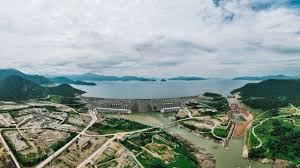
Ethiopia has officially inaugurated the Grand Ethiopian Renaissance Dam (GERD), Africa’s largest hydroelectric project, despite ongoing tensions with downstream neighbors Egypt and Sudan. The $5 billion dam is set to generate over 5,000 megawatts of electricity and could allow Ethiopia to export surplus power to the region.
Prime Minister Abiy Ahmed described GERD as a “shared opportunity” for East Africa, highlighting its potential to boost energy production and regional development. The inauguration ceremony on Tuesday drew a handful of regional leaders, including Kenya’s President William Ruto and Somalia’s President Hassan Sheikh Mohamud. Festivities began the night before, featuring lantern displays and drone shows with slogans like “geopolitical rise” and “a leap into the future.”
However, Egypt and Sudan, both heavily dependent on the Nile for water, voiced serious concerns about the dam. Officials from the two countries criticized Ethiopia’s actions as unilateral, warning that the dam could threaten their water security and violate international agreements. Neither country sent representatives to the inauguration.
The Blue Nile, one of the Nile’s main tributaries, flows north through Sudan into Egypt. GERD sits just 14 kilometers from the Sudanese border and measures 1.8 kilometers wide and 145 meters high. Pietro Salini, CEO of Italian construction firm Webuild, which built the dam, acknowledged the concerns. “I understand their worries… but regulating water from this dam will create additional benefits for neighbors,” he said.
GERD has fueled regional tensions since construction began in 2011. Negotiations involving Ethiopia, Sudan, and Egypt have stalled repeatedly. Last week, the two downstream countries released a joint statement labeling Ethiopia’s actions as a “continuous threat to stability.”
Sudan’s Roseires Dam, located about 110 kilometers downstream of GERD, faces potential risks if Ethiopia releases large volumes of water without coordination. The older dam, built 60 years ago at a fraction of GERD’s size, could bear the brunt of uncontrolled flows. Abdullah Abderrahman, manager of Roseires Dam, noted that the facility could face significant strain if water management is mishandled.
Despite these concerns, GERD could offer benefits to downstream nations. The dam may help regulate the annual flow of the Blue Nile, reducing flooding in nearby villages. Abderrahman also highlighted that GERD has lowered the amount of silt and debris reaching Roseires, helping preserve its storage capacity, which had previously shrunk by one-third due to sediment buildup.
Experts emphasize that GERD could provide long-term advantages beyond electricity generation and flood control. Dessalegn Chanie Dagnew, associate professor of water resources at Bahir Dar University and a member of Ethiopia’s parliament, said the dam could promote regional integration. “GERD will serve as a project that can really bring about cooperation and shared benefits in the region,” he explained.
While the concerns of Egypt and Sudan remain unresolved, Ethiopia continues to frame the dam as a step toward progress and sustainable energy development. With its massive capacity, GERD could transform the region’s energy landscape, support local economies, and provide a framework for eventual collaboration among the Nile Basin countries.
