


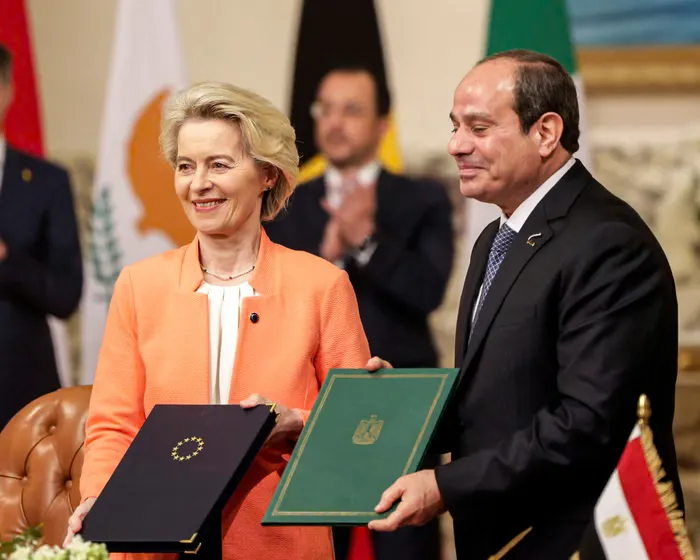
The European Commission is facing questions over whether it presented an overly positive picture of Egypt’s social welfare progress before approving billions of euros in financial assistance to the country. Leaked documents and government data have raised concerns about claims that Egypt had met targets linked to expanding support for poorer households. The issue concerns a wider financial agreement between the European Union and the Egyptian government, designed to support the country’s economy and strengthen cooperation on migration and regional stability.
The partnership was announced during European Commission President Ursula von der Leyen’s visit to Cairo in 2024. It included a financial package worth €7.4 billion, with €5 billion in loans offered under favourable conditions. The assistance was linked to economic reforms and other commitments. Among the targets was an increase of 160,000 households in Egypt’s Takaful and Karama cash-transfer programmes, which provide financial support to vulnerable families.
However, leaked EU reports and Egyptian ministry data indicate that the number of households receiving benefits fell by 85,734 between 2024 and 2026. The reduction reportedly occurred because more households were removed from the programmes than were added. Despite this, the Commission described one target as broadly fulfilled and another as fulfilled, allowing two loan instalments to move forward. The figures have raised questions about how the Commission assessed Egypt’s performance.
The European Commission has defended its assessment, saying the targets concerned the number of new families added rather than overall net growth in the programmes. It also insists that the conditions attached to the financial assistance were examined carefully. However, critics and European lawmakers are demanding a clearer explanation. They argue that weak enforcement of specific commitments could undermine confidence in the broader conditions attached to the agreement, including those relating to democracy, human rights and the rule of law.
Egypt has received €3.5 billion under the wider partnership, while a final €1.5 billion is expected by the end of 2027 if the remaining conditions are met. The controversy comes amid continuing scrutiny of Egypt’s treatment of independent journalists and media organisations. The debate could increase pressure on European officials to explain how financial support is monitored and whether future payments will depend on stronger evidence of progress. It also raises wider questions about how the EU balances economic cooperation with its stated political and human rights commitments.
