


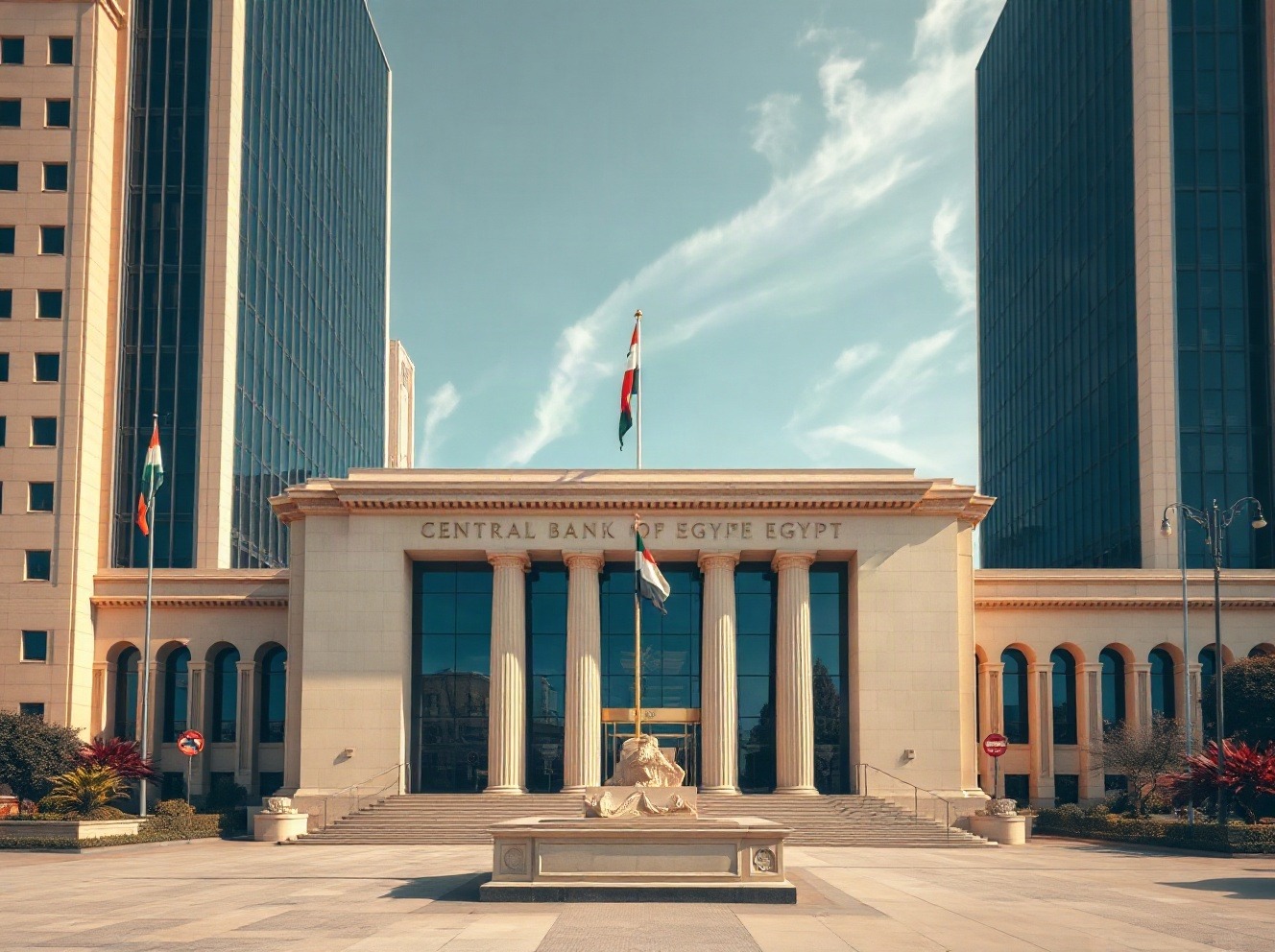
The Central Bank of Egypt kept its main interest rates unchanged on Thursday, September 24, 2026. The decision left the overnight deposit rate at 19 percent and the overnight lending rate at 20 percent. The bank also kept its main operation rate at 19.50 percent and the discount rate at 19.50 percent.
The decision came as Egyptian policymakers continued to watch inflation, economic growth and international financial conditions. The central bank said its decision reflected recent inflation developments, the outlook for prices and changes in the balance of risks. The bank also considered wider economic conditions before deciding to leave borrowing costs unchanged.
Egypt has been working to reduce inflation after several years of strong price pressure. Annual urban inflation slowed to 14.5 percent in August from 14.9 percent in July. However, core inflation moved slightly higher, reaching 14.9 percent compared with 14.7 percent previously.
The latest decision shows that policymakers are still cautious about changing rates. Lower interest rates can make borrowing cheaper for businesses and consumers, but they can also create pressure on inflation and the currency if financial conditions change too quickly. Higher rates can help control price growth but may make loans more expensive.
Economic growth has also been part of the central bank’s assessment. The bank said real gross domestic product growth slowed to 4.7 percent in the second quarter of 2026 from 5 percent in the previous quarter. For the full 2025/26 financial year, however, growth averaged 5.1 percent.
The bank expects growth to remain broadly stable around that level during the 2026/27 financial year. That outlook gives policymakers room to focus on inflation while also monitoring economic activity.
Global interest rates are another important factor. The United States recently raised its own interest rate, creating additional pressure on countries such as Egypt. When major economies offer higher returns on their financial assets, investors can move money between markets. This can affect exchange rates and borrowing costs in emerging economies.
Regional security risks are also important. Egypt is located close to several areas affected by conflict and political tension. Changes in energy prices, shipping costs and regional trade can affect inflation and economic growth.
The central bank must therefore consider more than domestic inflation alone. Oil prices, food costs, foreign investment and currency movements can all influence the Egyptian economy.
Interest rates also matter to ordinary Egyptians. High borrowing costs can make loans for homes, cars and businesses more expensive. At the same time, higher deposit rates can provide stronger returns for savers. The central bank must balance these different effects.
Businesses are also watching the decision closely. Companies need credit to expand, buy equipment and finance working capital. Stable interest rates can make financial planning easier because companies have a clearer idea of their borrowing costs.
The banking system is also an important part of Egypt’s economic recovery. Strong banks can help provide credit to businesses and households while supporting investment.
The latest decision does not mean Egypt’s inflation problem has disappeared. Price growth remains high compared with many economies, even though the recent trend has been slower. Policymakers will continue to monitor monthly inflation figures before deciding whether future rate changes are appropriate.
The central bank’s decision therefore keeps monetary policy steady for now. The next meetings will depend on inflation, economic growth, exchange rates and global financial conditions.
For Egypt, the September 24 decision shows that policymakers are taking a cautious approach while the economy adjusts to changing domestic and international conditions.
