


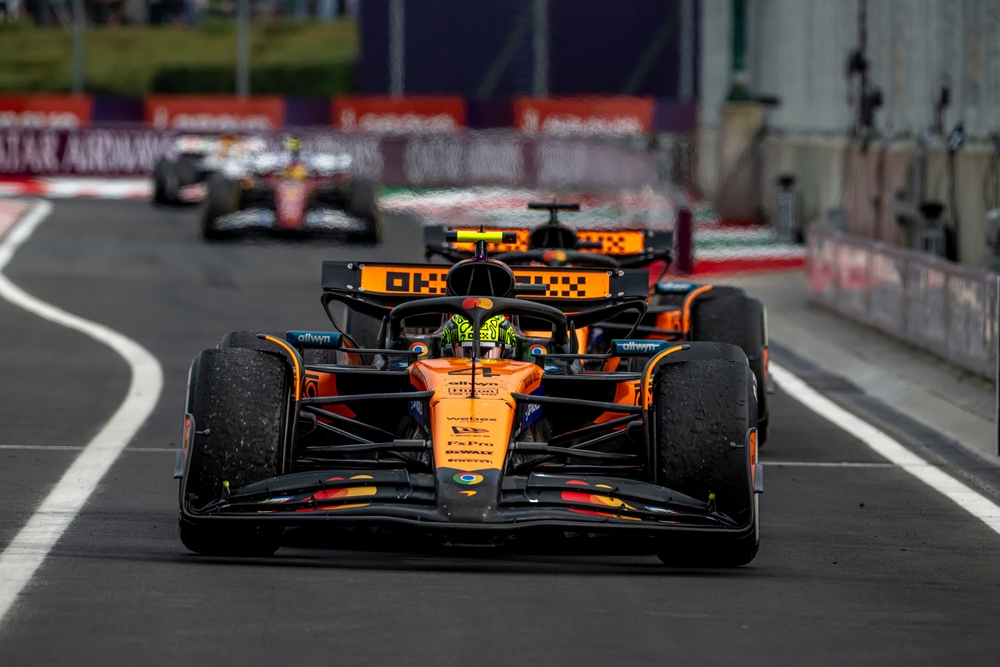
Groundbreaking Rule Changes Set to Transform Racing
The 2025 season ends with McLaren taking both championships, but 2026 brings a complete transformation. Formula 1 introduces sweeping technical regulations and expands the grid to eleven teams. A major British sports outlet highlights the key changes fans should follow in this bold new era.
The new rules represent the largest overhaul in years. Cars shed 30 kilograms, narrow by ten centimetres, and become far more efficient. Power units now split output almost equally between electric and combustion energy. Fully sustainable fuels complete the transition.
The impact on racing remains uncertain. Chassis and engine regulations have never changed so drastically at the same time. Aerodynamics also undergo a full redesign. The 1.6-litre V6 hybrid remains, but the MGU-H disappears, and the electric share rises to roughly 50 percent.
Engineers must rethink airflow completely. Ground-effect tunnels vanish. Movable front and rear wings return to increase straight-line speed and improve energy recovery under braking. Drivers voice concerns over predictability and car balance.
The combustion engine often acts as a generator and may reach maximum revs in some corners. DRS disappears because the rear wing now serves new functions. A push-to-pass system replaces it, delivering short bursts of electrical energy.
Lewis Hamilton admits he cannot predict the results. He warns that wet-weather driving may become extremely challenging but hopes the new cars deliver thrilling racing.
British Teen Arvid Lindblad Joins the Grid
Most drivers remain in 2026, but several moves stand out, including a new British rookie.
Isack Hadjar leaves Racing Bulls to join Max Verstappen at Red Bull after claiming his first podium at Zandvoort.
Arvid Lindblad, an 18-year-old Briton with Swedish and Indian heritage, takes Hadjar’s former seat. He finished sixth in Formula 2 with Campos Racing and now teams up with Liam Lawson.
Cadillac Enters as the 11th Team
Cadillac joins Formula 1 with backing from General Motors.
The team opts for experience, signing Valtteri Bottas and Sergio Perez, who share 106 podiums.
Graeme Lowdon becomes team principal after previous roles at Virgin and Marussia.
Cadillac will run Ferrari engines for three seasons before switching to GM-built power units in 2029.
Audi Acquires Sauber and Joins as a Factory Team
Audi enters Formula 1 by fully taking over the Swiss Sauber team, which finished ninth in 2025.
Audi develops its own engine for the new regulations. Jonathan Wheatley becomes team boss and works with Mattia Binotto, who leads Audi’s F1 programme.
Nico Hulkenberg and Gabriel Bortoleto remain as drivers for Audi’s debut season.
Ford Partners with Red Bull as Renault Exits Engine Supply
Red Bull begins a new engine partnership with Ford, co-funding its 2026 power-unit programme.
This ends Red Bull’s long collaboration with Honda. Honda becomes Aston Martin’s works supplier, where Adrian Newey takes over as team principal.
Renault exits engine building entirely. Alpine will now use Mercedes power units.
Madrid Replaces Imola on the Calendar
The 2026 calendar features 24 races, starting in March in Australia and ending in December in Abu Dhabi. Spain hosts two events next season.
Madrid replaces Imola with a hybrid circuit combining public roads and private sections still under construction.
The Madrid race runs from 11–13 September and concludes the uninterrupted European leg.
Barcelona remains as the Barcelona-Catalunya Grand Prix from 12–14 June.
Canada moves to 22–24 May to align with Miami, which runs 1–3 May. Monaco shifts to 5–7 June.
Six sprint races return. Silverstone joins China, Miami, Canada, Zandvoort and Singapore, with Zandvoort hosting its final season.
